LVP installation cost in Reno
$2–$3 / sq ft for materials and labor — Reno-market range for materials + labor; premium waterproof-core product lines run higher. Premium waterproof-core product lines run toward the higher end and sometimes above it; this range does not include subfloor prep, furniture moving, or removal/disposal of old flooring unless a quote says so.
| Room size | Estimated installed cost |
|---|---|
| 200 sq ft (single room) | $400–$600 |
| 800 sq ft (main living areas) | $1,600–$2,400 |
| 1,500 sq ft (whole-home single-story) | $3,000–$4,500 |
What moves the price within that range:
- Click-lock (floating) install vs. glue-down — glue-down costs more in labor
- Wear-layer thickness and waterproof-core construction push cost up
- Subfloor prep — LVP needs a flat, clean subfloor or self-leveler gets added
- Underlayment, if not already built into the plank
Click-lock vs. glue-down
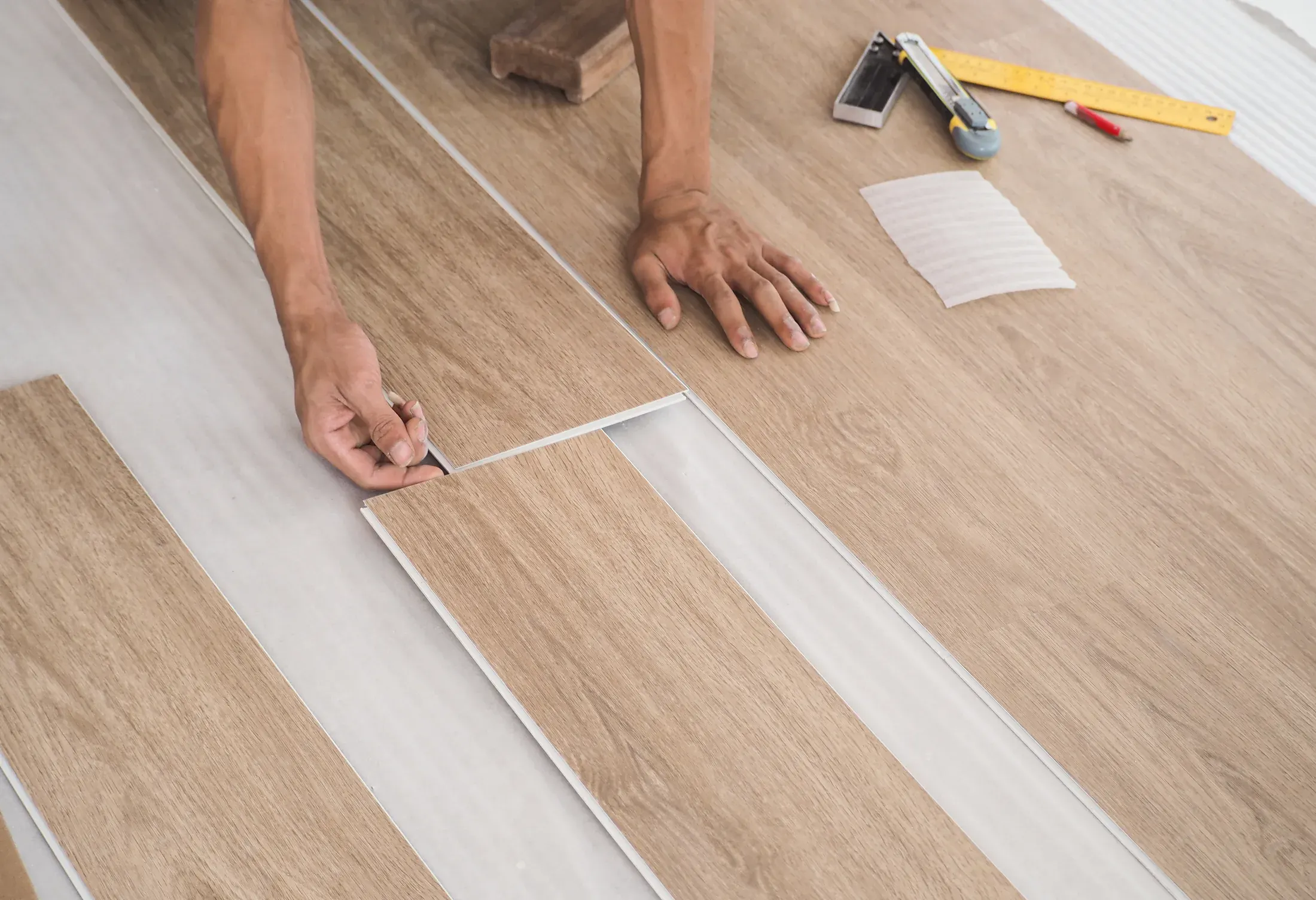
Click-lock (floating) installation snaps planks together over an underlayment without adhering to the subfloor — faster to install, easier to replace a damaged plank later, and the more common residential choice. Glue-down installation bonds each plank directly to the subfloor with adhesive — more labor and dry time, but a firmer feel underfoot and sometimes preferred in commercial-feel spaces or rooms with radiant heat. Most Reno homeowners choosing LVP for a residential remodel end up with click-lock; ask specifically which method a quote assumes, since it changes both the labor line and how repairs work later.
Why LVP is the fastest-growing choice in Reno right now
LVP delivers a convincing wood- or stone-look surface with genuine water resistance at a price well below hardwood or tile, which makes it a practical fit for kitchens, bathrooms, and whole-home visual consistency — spaces where solid hardwood is a harder sell and tile costs more to install. It's also generally quicker to install than either alternative, which keeps labor cost down further. None of that makes it automatically the right choice for every room — see the comparison note below — but it explains why demand for it has outpaced other materials in this market.
LVP vs. hardwood: the short version
LVP costs less per square foot than hardwood installation ($2–$3 / sq ft vs. $8–$10/sq ft) and is far more dimensionally stable across Reno's dry, temperature-swinging climate — a real advantage in kitchens, bathrooms, and other moisture-exposed rooms where solid hardwood isn't a great fit anyway. Hardwood still generally holds a resale-value and can-be-refinished advantage LVP doesn't have. The full side-by-side is on the LVP vs. hardwood comparison; the hardwood cost page has the install and refinishing figures, and laminate vs. LVP, carpet vs. LVP, and tile vs. LVP cover the other directions.
Subfloor prep: the step that changes the quote
LVP needs a flat, clean, structurally sound subfloor — not a special one, but an unprepared subfloor is the single most common reason an LVP job ends up costing more than the first number quoted. A self-leveling compound or additional prep work to flatten an uneven subfloor is a legitimate add, not an upsell, if the installer explains why. What's harder to justify is a quote that never mentions the subfloor at all.
What license should an LVP installer hold?
LVP installation falls under Nevada's NSCB Classification C-16a ("Covering Floors"), the same classification that covers carpet, hardwood, and laminate. See the contractor vetting guide for how to verify it at https://app.nvcontractorsboard.com.
Methodology
Reno-specific per-square-foot ranges (hardwood, LVP/vinyl, laminate, carpet, tile) are compiled from a September 2026 Reno-market pull covering hundreds of local quotes, including a 778-quote hardwood-specific dataset standardized to a 1,282 sq ft home (RENO-017). Where no Reno-specific figure exists — hardwood floor refinishing — the range shown is a national proxy (Angi, updated July 2026) and is labeled as national, not local, wherever it appears. Ranges are materials + labor for a typical installation and do not include subfloor repair, furniture moving, or old-flooring removal/disposal unless stated. Rechecked quarterly.
Verified 2026-09-03. See the full cost guide for every material side by side.